
Published entry
≥3000 Pa is retained exactly as the source writes it; no inequality reversal or pressure-class assignment has been made.
Read the source HVAC & REFRIGERATION
Select the core, joint and duty together; published A1 wording and report covers do not establish a universal fire-resistance rating.
From Anhui Yeniu HVAC Equipment Co., Ltd.
Individual product research · HVACDeck Editorial · Sources checked 2026-10-11
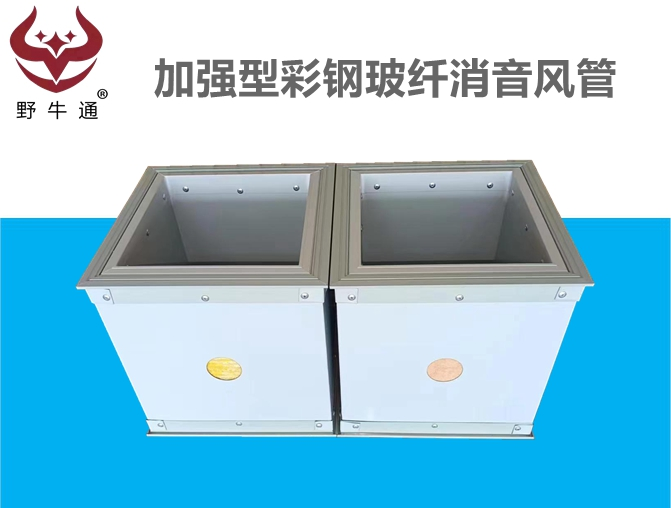
Yeniu describes this duct as a glass-fibre composite with colour-coated steel facing for air-conditioning supply and return air. Its page offers 20, 25 and 30 mm core thicknesses and a C-insert joint. These are construction choices within a family; no unique orderable model or complete duct schedule is established.
The same publication combines a material fire-class claim, conductivity, pressure wording and maximum velocity. Each has a different scope. Before selecting it for a project, define the required duct geometry, pressure and duty, then obtain evidence for the exact proposed assembly. A general ventilation description and a report-gallery heading do not automatically qualify the family for smoke control.
This brief transcribes the official entries and explains what remains needed. No fire-duration, pressure class, air-leakage result, acoustic rating or installation allowance has been invented.
This is an equipment family; its range does not identify one orderable configuration.
Swipe the table, or focus it and use arrow keys, to read the conditions and sources.
| Parameter | Published value | Conditions and evidence |
|---|---|---|
| Facing / core | Colour-coated steel / glass fibre | Manufacturer construction description; steel gauge, coating and core density not stated. Source |
| Core thickness options | 20 / 25 / 30 mm | Family options. No thermal or fire result for each thickness established. Source |
| Connection | C-insert strip | Published connection form; joint dimensions, sealant and pressure/leakage evidence absent. Source |
| Pressure entry as printed | ≥3000 Pa | The page labels this as maximum pressure but uses a lower-bound inequality. Meaning and test basis need clarification; not converted into a safe operating ceiling. Source |
| Thermal conductivity claim | ≤0.032 W/(m·K) | Temperature, density, moisture and test method not supplied; not a complete installed thermal-resistance value. Source |
| Maximum air-velocity claim | ≤25 m/s | Manufacturer claim without geometry or acoustic/leakage test conditions; not a project operating recommendation. Source |
| Fire-class wording | A1 non-combustible | Manufacturer claim. No matching classification report or assembly fire-resistance duration established in this review. Source |
The source calls ≥3000 Pa its maximum pressure. The label and inequality cannot safely be read as a single ceiling. Ask whether this is a tested resistance threshold, an allowable positive pressure, a maximum pressure claim or another measurement, including duct size, supports, joints and the test method.
Also specify positive and negative pressure duties separately. The reviewed page does not state a negative-pressure limit, leakage class or pressure-test result for the proposed assembly. A C-insert joint and a core thickness alone do not settle those requirements.
≥3000 Pa is retained exactly as the source writes it; no inequality reversal or pressure-class assignment has been made.
Read the sourceRequest the applicable pressure and leakage test, tested duct geometry and joint/support details. Have the project designer confirm the resulting operating specification.
The product text claims A1 and cites GB/T 17428-2009. The national standards record identifies GB/T 17428-2026 as replacing that edition from 1 October 2026. A standards record identifies a method and revision; it does not establish this family's performance.
The report numbered 2023400687 is shown as a cover naming glass-fibre composite ducts with 1000×500 mm and 1000×250 mm openings. The publication does not establish the full test results or which offered thickness and connection it covers. The other gallery report likewise supplies cover evidence without a complete result.
Ask for the classification document for the actual core/facing construction. The source’s A1 wording is not evidence of a duct assembly’s integrity or insulation duration.
Read the sourceObtain complete test pages and the allowed construction variations: dimensions, thickness, joint, supports and installation arrangement. Do not extract a fire duration from a cover.
Read the sourceHave the designer and supplier agree the applicable standard and evidence for the ordered assembly. The new standard record is not a certificate for this product.
Read the sourceThe conductivity claim ≤0.032 W/(m·K) lacks its measurement conditions. Core thickness alone does not establish the installed duct’s total thermal resistance, moisture performance or condensation risk. Obtain the material sheet and assembly details for the proposed thickness, including continuity at joints and penetrations.
The publication does not state steel gauge, glass-fibre density, vapour-control arrangement, joint sealant, support spacing or cleaning/service method. Record these as supplier questions instead of copying them from a different composite duct system. The text’s acoustic and antibacterial claims likewise lack numerical reports in the reviewed product entry.
The following request outline is editorial procurement guidance for this family, not a manufacturer installation procedure. It helps the supplier return a matched offer.
Provide the ventilation or specified smoke-control duty, drawings, duct sizes, positive/negative pressure, flow, temperatures and site conditions. Identify the designer’s acceptance requirements.
Request core thickness/density, steel gauge/coating, C-insert detail, sealing, supports, penetrations and supplied accessories. Ask the supplier to identify any mismatch with the tested assembly.
Resolve ≥3000 Pa; obtain material and full assembly reports, revision basis, pressure/leakage evidence and the installation/inspection instructions for the proposed scope. Agree factory and site acceptance separately.
This is a published duct construction family, not an independently tested project selection. Price, MOQ, delivery time, leakage class, acoustic loss, a universal fire duration and destination approval remain unknown. Yeniu’s historical company public record belongs in its manufacturer profile and does not replace product-specific evidence.
Use the manufacturer profile to review the supplying entity and fabrication scope. Use the complete construction and test documents to review the product; the two decisions should remain separate.
Compiled by HVACDeck Editorial. Source review identifies what the publication states; it is not an independent performance test or certification.
Editorial method and corrections · Report a detail with this page URL
Send the manufacturer your required duty, installation conditions and the unresolved items identified in this brief.