Centrifugal, axial and mixed-flow fans, and what a smoke-extract rating means
Choose the fan type for the system first, then check whether any fire duty is actually certified.
 HVAC & REFRIGERATION
Practical equipment briefs from HVACDeck Editorial.
Choose the fan type for the system first, then check whether any fire duty is actually certified.
A CE mark is a conclusion, not evidence. Ask for the documents behind it for your product and market.
A decibel figure means little until you know whether it is power or pressure, and how it was measured.
Three temperatures decide most of a cooling tower enquiry. Get them right before comparing cells and fans.
What the compressor tells you about capacity range, part-load behaviour, oil and service.
Read the refrigerant line before the price: it decides where the unit can be sold, installed and serviced.
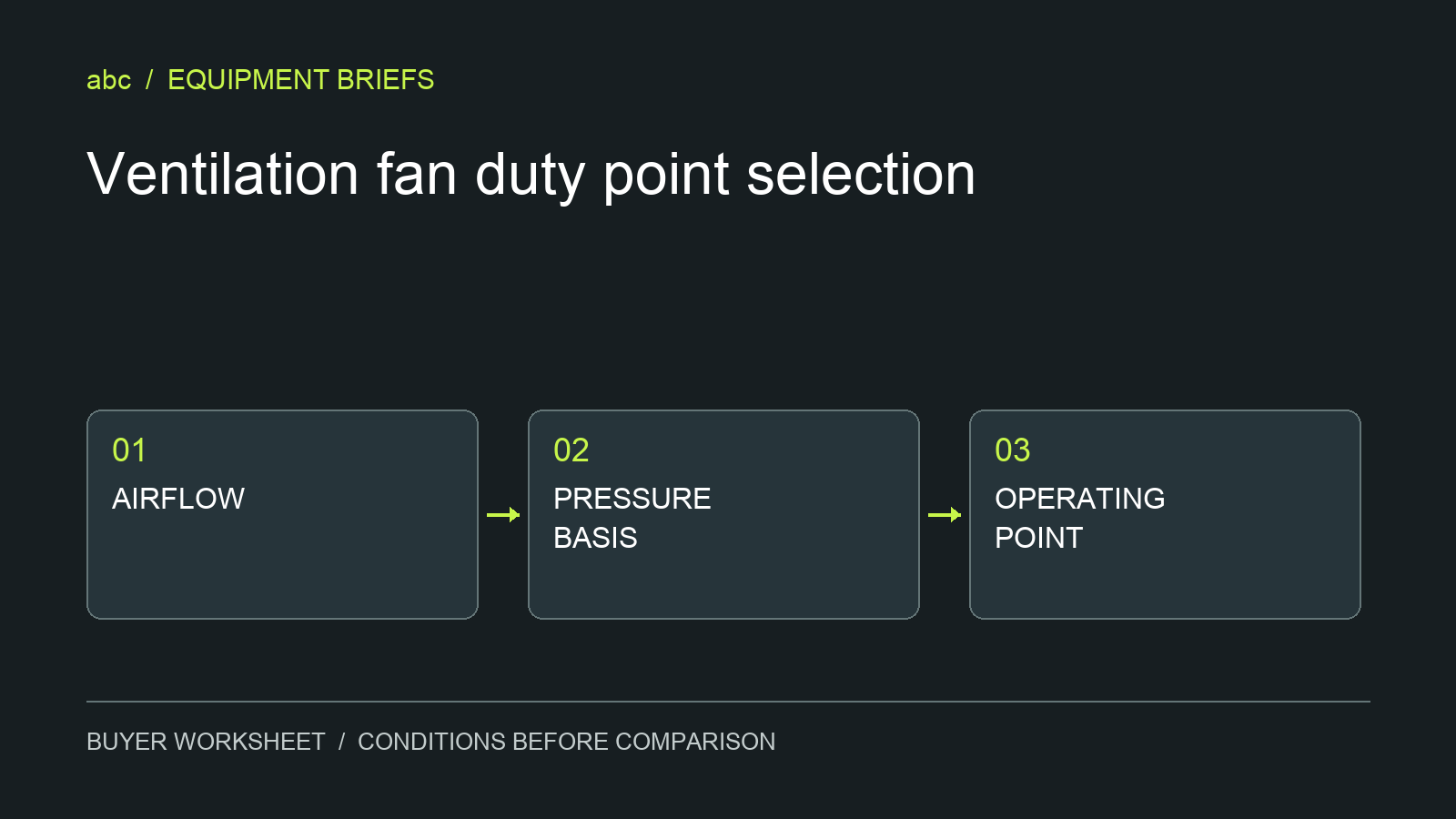
Ask for a matched flow, pressure basis and selected configuration.
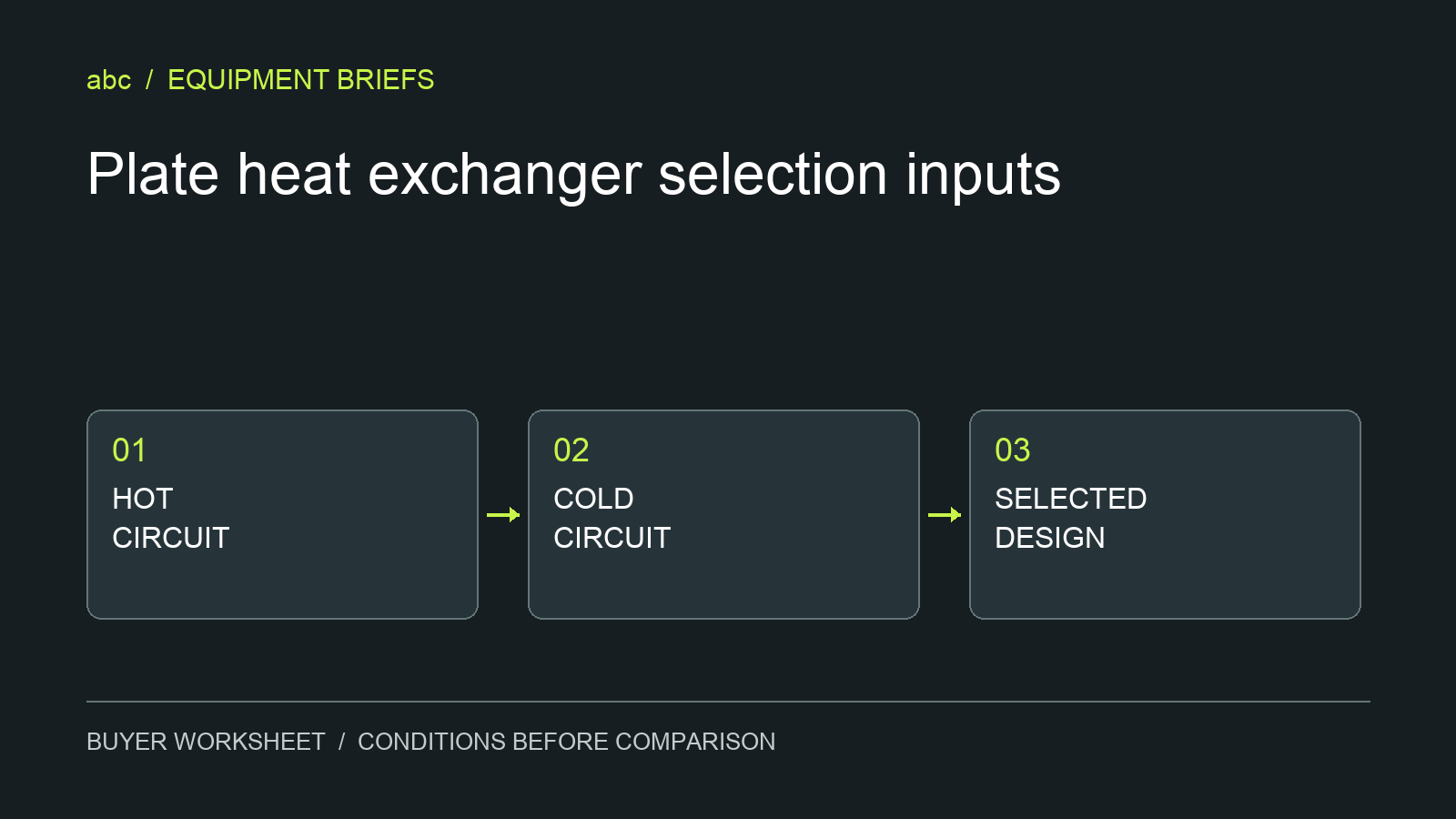
Describe both fluid circuits before asking a supplier to choose an exchanger.
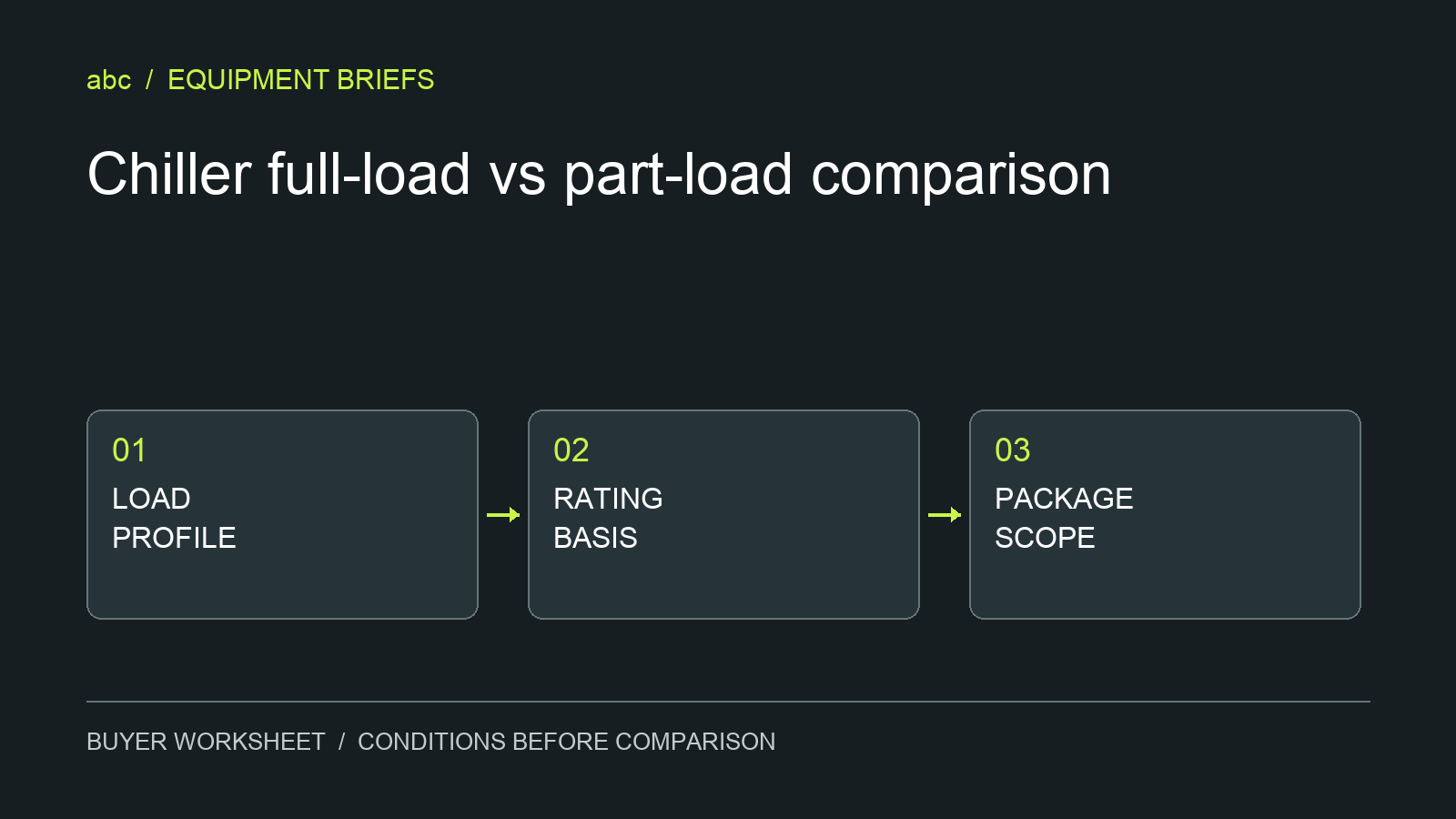
Build a comparison that states the duty, rating basis and equipment boundary.
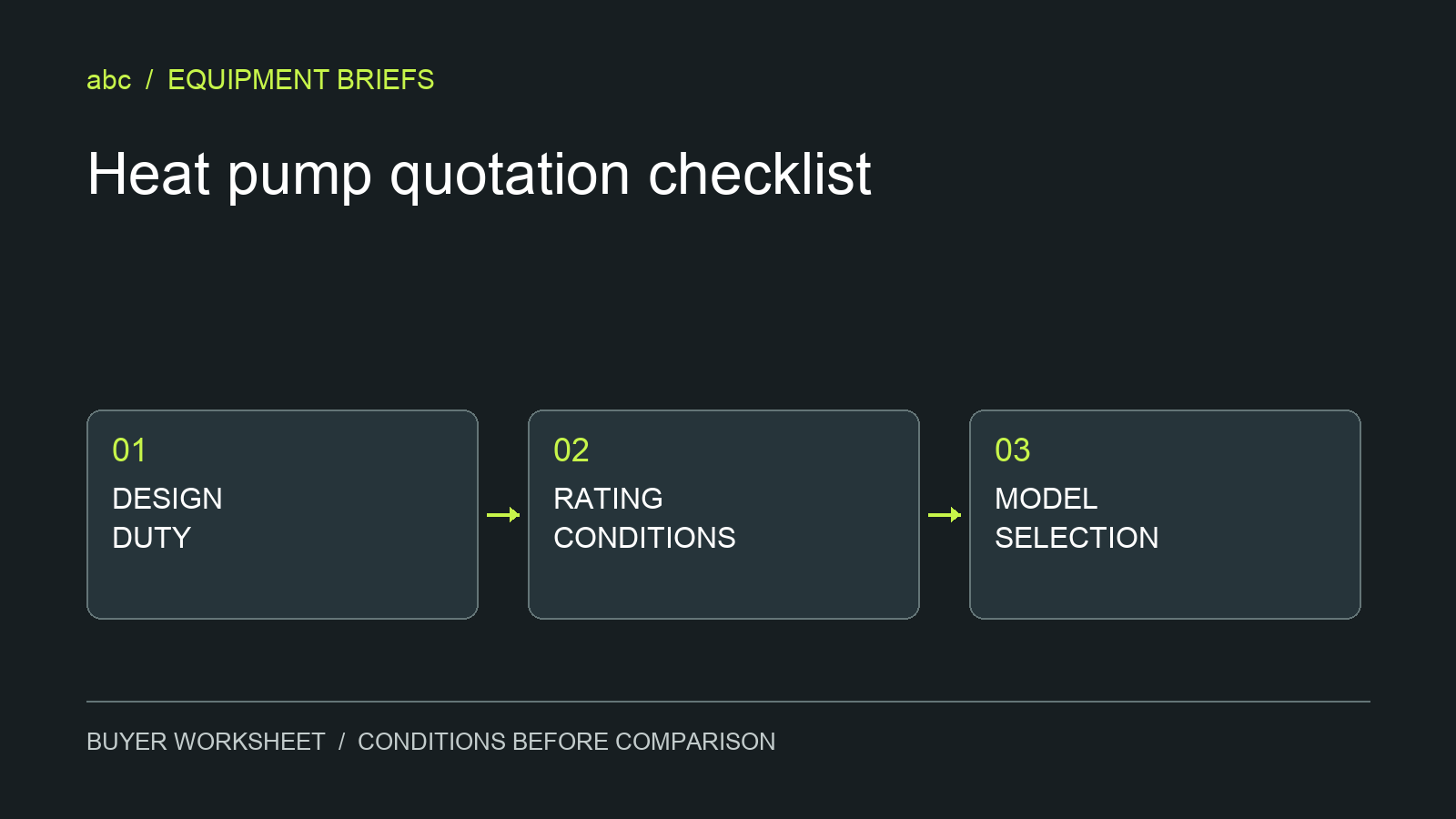
Separate a catalogue nameplate value from the duty your project actually needs.
Each guide combines a procurement workflow with a blank CSV that buyers and suppliers can fill in. Examples are editorial templates, not field tests or product performance results.
Use the heat-pump sheet for source/delivery conditions and system integration; use the chiller sheet for evaporator/heat-rejection schedules and the included-energy boundary. Keep exact model declarations and selected operating points separate from family descriptions.
Use the plate-exchanger sheet to document both circuits and material/pressure constraints. Use the fan sheet to define airflow, pressure type, air conditions and curve basis. The worksheet’s document/revision and clarification columns preserve unresolved evidence.
Download the blank sheet, fill the buyer requirements and send the same issue with your project drawings to each shortlisted supplier. Ask them to complete response and document columns. Review incompatible conditions before comparing values, and keep unanswered items pending.