
Aerodynamic evidence
Exact-model curve and input-power data at defined density, speed and pressure basis.
 HVAC & REFRIGERATION
Select the actual fan assembly through its curve, electrical package, installed air path and vehicle requirements; the catalogue image supplies no rated model schedule.
From Jiangsu Rongbang Machinery Manufacturing Co., Ltd.
Individual product research · HVACDeck Editorial · Sources checked 2026-10-11
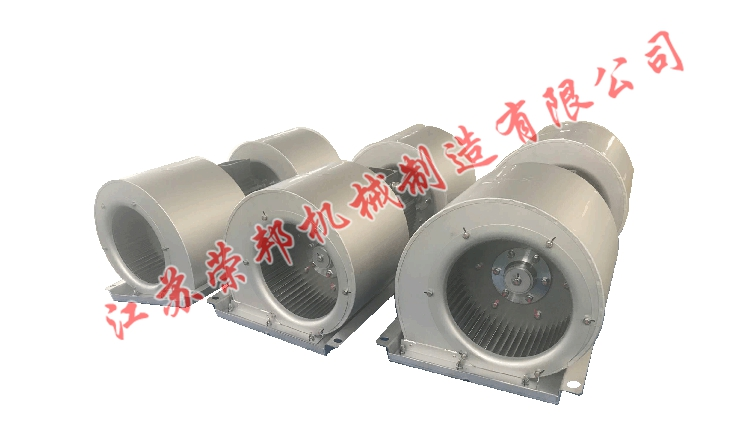
The official item names 离心风机 in the train air-conditioning fan category. The actual original image shows several centrifugal scroll-housing fan assemblies with circular inlets, impeller views and mounting feet. The visible construction does not identify a motor rating, voltage, rotation, dimensions or railway qualification.
The product overview is empty on the reviewed page, with no model, airflow/pressure curve, efficiency, noise or mass schedule. This brief therefore sets out the selection and acceptance information a buyer should obtain for the offered rail fan; it does not assign invented catalogue values or transfer ratings from a neighbouring axial fan.
This is an equipment family; its range does not identify one orderable configuration.
Swipe the table, or focus it and use arrow keys, to read the conditions and sources.
| Parameter | Published value | Conditions and evidence |
|---|---|---|
| Published product designation | 离心风机 · train air-conditioning fan category | Family description, not an authenticated exact model. Source |
| Inspected image | Scroll housings, circular inlets, impellers and mounting feet | Appearance only; motor, dimensions, discharge orientation and ratings not established. Source |
| Performance information | No numerical curve, power, efficiency or acoustic schedule on reviewed item | Require exact offered model and test conditions. Source |
| Company test capability claim | Fan wind-tunnel laboratory and impeller dynamic-balance equipment | Profile statement; not an accredited test result for this assembly. Source |
Specify the required airflow and resistance of the actual evaporator/condenser or ventilation air path, including filters, coils, duct transitions, dampers and terminals as applicable. Distinguish static from total pressure, and state air density or temperature/altitude conditions. No pressure basis is supplied by this item.
Request the exact model’s airflow–pressure, input-power and efficiency curves for the selected speed and installation/test arrangement. Locate the duty on the curve and confirm stable operation, motor loading and the operating range across relevant system conditions. Maximum airflow at low resistance is not a substitute for the required airflow at the installed pressure.
Provide the installation envelope, inlet clearances, discharge direction and flange/mounting-hole dimensions. Confirm rotation and how it is observed, motor position, guards and the actual mounting drawing. The catalogue photograph is not a scale drawing and cannot establish these details.
An obstructed inlet or abrupt discharge transition can change the installed result even when a bench curve is valid. Agree the connection and clearances used in selection and acceptance; check accessible fasteners, connector reach and a safe removal route within the vehicle equipment bay. Do not select an assembly solely because its housing looks similar to an existing fan.
Identify the actual power supply, voltage/frequency or DC/control arrangement, starting/current requirements and protection. Ask whether the motor/drive is included, what speed control is allowed and which faults/feedback are available to the vehicle controller. None of these characteristics is established by the product image.
Close connector/pinout, cable entry, earthing, insulation and control interfaces on the approved assembly drawing. Verify motor loading through the required operating range, including the intended control settings. A speed change or alternative motor is a controlled design change, not automatically an equivalent spare.
The railway application label does not prove compliance with a shock/vibration, fire, electrical or environmental standard. Have the vehicle integrator specify applicable requirements and test acceptance for the intended location. Ask for reports that identify the actual fan, motor, supports/mounts and configuration, with dates and test conditions.
For noise, distinguish sound power from sound pressure and record speed, duty, measurement method and installation. For vibration, request the impeller balance and complete-assembly checks plus any project-specific test. Company welding or management certification cannot substitute for these fan/vehicle results.
Exact-model curve and input-power data at defined density, speed and pressure basis.
Drawing, material/finish, balance, mounting and applicable assembly vibration/shock results.
Vehicle air-path flow, controls, noise/vibration and maintainability against project acceptance.
The actual company EN15085 image prints CL1/D/P railway welding scope and refers to an annex. This can be relevant to a specified welded component when the holder, range and current status are confirmed; it is not a fan efficiency or aerodynamic certification. The ISO9001:2015 image includes rail ventilation-fan design/production/sales, but a quality-management scope still does not supply this model’s performance.
Request the relevant annex and current issuer verification for the contract, and the selected model’s own report separately. The government-hosted housing-project report concerns a different product scope and does not authenticate delivery or acceptance of the photographed centrifugal fan.
The reviewed item supplies no price, lead time or warranty schedule. Agree delivery and acceptance around a controlled assembly, with test and inspection documents that can be repeated for replacements.
Approve exact model, duty/curve, motor/control, drawing, environmental requirements and inspection/test plan.
Check dimensions, rotation, connectors, finish, balance and agreed performance; retain assembly identification and report conditions.
Verify installed flow, controls and noise/vibration, then hand over maintenance access, spare codes and controlled substitution rules.
Compiled by HVACDeck Editorial. Source review identifies what the publication states; it is not an independent performance test or certification.
Editorial method and corrections · Report a detail with this page URL
Send the manufacturer your required duty, installation conditions and the unresolved items identified in this brief.

