
Tegao floating-coil storage hot-water exchangers
Match stored usable water, demand peaks and recovery duty; a large vessel and an automatic-descaling claim do not establish system performance.
From Beijing Tegao · Heating and hot-water equipment
Individual product research · HVACDeck Editorial · Sources checked 2026-10-11

Define the hot-water demand before choosing the storage vessel
Tegao names BIFGVL, B2FGVL and BFGVW for its vertical/horizontal storage or semi-storage floating-coil heat exchangers. The reviewed description positions the family mainly for domestic hot-water systems and distinguishes steam-to-water from water-to-water heating. It combines stored water with a floating heat-transfer coil and mentions an arrangement for two different heating media. No ordered storage volume, heating output, recovery test or circuit drawing is provided.
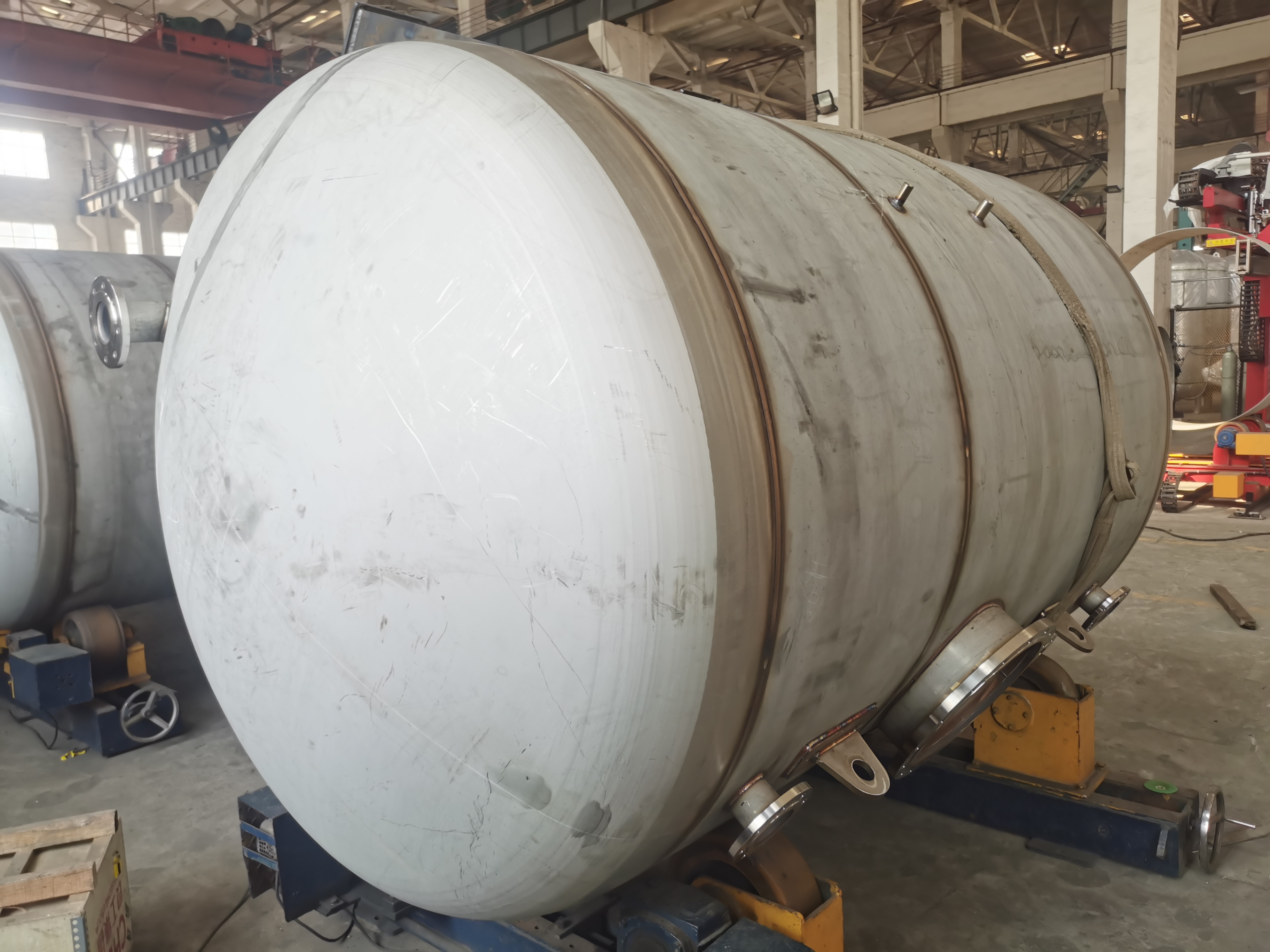
The original image shows a large horizontal cylindrical vessel on shop rollers, with several flanged openings and connections. It is useful fabrication context, but the coil, internal water distribution and final installed controls cannot be seen. Historical award, atlas and patent-count statements on the page are kept separate from the selected product’s current conformity. Use this brief to compare a defined hot-water demand and recovery requirement, rather than purchasing by vessel volume or an unconditioned claim of no stagnant water.
Published parameters and their scope
This is an equipment family; its range does not identify one orderable configuration.
- Family designation
- BIFGVL / B2FGVL / BFGVW
Swipe the table, or focus it and use arrow keys, to read the conditions and sources.
| Parameter | Published value | Conditions and evidence |
|---|---|---|
| Published model families | BIFGVL / B2FGVL / BFGVW | Vertical/horizontal storage or semi-storage offer; exact suffix/orientation schedule not established. Source |
| Published service | Domestic hot water | No independently checked installation or potable-water approval supplied. Source |
| Heating media described | Steam-to-water / water-to-water; two heating media mentioned | An issued circuit drawing is needed; simultaneous capacity and source-switching logic unknown. Source |
| Original production image | Horizontal vessel on rollers with flanged openings and connections | Internal coil and water-distribution construction not visible; no size or pressure rating assigned. Source |
| Selection data missing | Usable volume, recovery output, design pressures and temperatures | No current family rating table or witnessed recovery result reviewed. Source |
Selection and application review
Compare the demand profile with usable storage and recovery
Give Tegao the actual hot-water use pattern: peak draw, duration, inlet conditions, required delivery temperature and the available heating-medium conditions. Ask for usable storage and continuous recovery stated together at those conditions. The supplier’s generic description does not provide a number of users, rooms or fixtures that any family member can serve.
Separate nominal vessel volume from usable hot water under the agreed control and mixing arrangement. Require the project designer’s system selection and the supplier’s selected thermal schedule. No universal reserve percentage, recovery time or simultaneous demand factor is invented here.
Resolve the heating source and any dual-medium arrangement
The page offers steam or hot water as the heating medium and says the product can suit two different media. It does not show whether the actual quotation has separate coils, a shared arrangement or which interfaces are included. Obtain a labelled internal drawing and a circuit diagram for the ordered configuration.
Specify which source is normally available, which can be lost and how the system should respond. Ask for the actual transfer/priority sequence and the stated performance with each source individually. The sentence about two media cannot establish automatic changeover, full-duty backup or simultaneous summed capacity.
Review the water path and maintenance reality
The description claims no dead-water area and attributes reduced scale adhesion to coil movement and vibration. Neither the family photograph nor the reviewed text provides a distribution/temperature test or a water-quality envelope proving those claims for a selected installation. Request the water-path drawing and written operating/maintenance conditions.
Have the responsible project designer determine the hot-water hygiene and distribution requirements. Confirm flushing, draining, inspection and cleaning arrangements with the supplier. The moving-coil description is not a reason to omit maintenance or assume that all water sources are compatible with the vessel and coil materials.
Check the large vessel’s installation and pressure dossier
The original shop photograph shows a horizontal shell on rollers, accessible flanged openings and several connections. Ask for the actual issued dimensions, transport/operating mass, supports, nozzle schedule and space needed for internal service. The pictured assembly is not a dimensioned drawing and its visible openings do not prove the complete delivered accessories.
Obtain the material schedule and pressure/temperature limits for the water vessel and every heating circuit. Current manufacturing documentation must identify the ordered construction and actual production site. Historical atlas references and patents do not certify this pressure boundary or settle local project acceptance.
Agree the delivered system and recovery evidence
Clarify whether the quotation includes only the exchanger/vessel or also pumps, valves, mixing arrangements, sensors and controls. Obtain the control sequence, temperature measurement points and interface to the distribution system. For a dual-medium order, record the tests for each mode rather than relying on the general family name.
Agree the thermal/recovery evidence and inspection records delivered with the equipment. Current prices, lead times, exact capacities and independent installation results were not established. This is a platform-written procurement brief for the named storage construction; it makes the missing selection work visible.
Describe the actual draw
Issue peak use, duration, temperatures and heating-medium availability.
Approve the vessel and internals
Confirm usable storage, recovery, water path, source circuits and service access.
Close delivery and acceptance
Record accessory/control boundaries and the ordered recovery and inspection evidence.
Sources and review scope
Compiled by HVACDeck Editorial. Source review identifies what the publication states; it is not an independent performance test or certification.
- Official floating-coil storage family pageChecked 2026-10-11 · Complete text and original 3648 × 2736 workshop vessel photo individually reviewed; no selected rating table.
- Official manufacturing and site overviewChecked 2026-10-11 · Two-location description and manufacturing claims read; no current pressure licence verification.
Editorial method and corrections · Report a detail with this page URL
Turn the evidence into an enquiry
Send the manufacturer your required duty, installation conditions and the unresolved items identified in this brief.
Other equipment from this manufacturer
Tegao corrugated-tube heat-exchanger constructions
Tegao TGTL / TGTW semi-instantaneous floating-coil exchangers