
Jinghai gas-boiler flue-gas heat recovery
Evaluate the heat sink, draft and condensate interfaces before adopting unconditioned plume, seasonal-water or payback claims.
From Beijing Jinghai · Heat-exchange manufacturing
Individual product research · HVACDeck Editorial · Sources checked 2026-10-11

Specify a boiler-specific recovery and condensate package
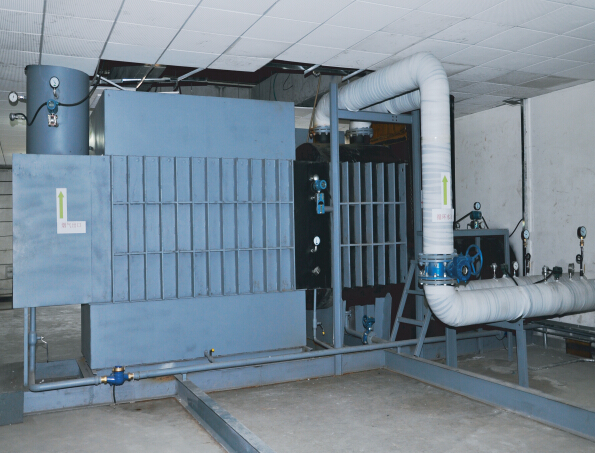
Jinghai’s gas-boiler flue-gas recovery page identifies a heat-recovery and plume-reduction assembly rather than a replacement boiler or complete emissions-treatment plant. The original site photograph shows a ducted installation, and the description names 316L heat-transfer plates and a reported equipment envelope of 7.6 × 1.6 × 2.6 m. No corresponding boiler size, fuel composition, gas-flow schedule or water-side selection is supplied.
The page reports 36.9°C exhaust, 38°C condensate and seasonal/economic outcomes, including 2,160 tonnes of recovered water. Those values are not portable ratings for an arbitrary boiler or heating season. This brief uses them as dated, unconditioned supplier references and focuses on the missing heat sink, boiler/draft interfaces, condensate handling and measurement plan required before a project can compare performance or payback.
Published parameters and their scope
This is an equipment family; its range does not identify one orderable configuration.
- Family designation
- Gas-boiler flue-gas recovery
Swipe the table, or focus it and use arrow keys, to read the conditions and sources.
| Parameter | Published value | Conditions and evidence |
|---|---|---|
| Published material | 316L heat-transfer plates | Supplier page identifies plates only; whole-assembly materials/corrosion suitability not established. Source |
| Reported temperature outcomes | Exhaust 36.9°C; condensate 38°C | No boiler load, ambient, inlet gas or receiving-water conditions supplied. Source |
| Reported physical envelope | 7.6 × 1.6 × 2.6 m | Page reference without a named model/drawing revision; not universal family dimensions. Source |
| Efficiency claim | Thermal-efficiency increase 4.0%–11% | Percentage-point versus relative increase and fuel-value/measurement basis not defined. Source |
| Seasonal and economic claims | 2,160 t recovered condensate; two heating seasons payback | No boiler output, season duration, metering or tariffs provided; not buyer project guarantees. Source |
| Service-life statement | 20-year design life; maintenance-free wording | No actual exposure/inspection/lifecycle file reviewed; maintenance tasks still require definition. Source |
Selection and application review
Select a usable heat sink and a consistent recovery duty
Provide the boiler fuel, firing/load profile, entering flue-gas temperature, gas composition/flow and available receiving-water temperatures. Obtain the selected recovery duty, water flow and pressure drop, along with gas-side resistance. A low exhaust-temperature number does not establish the amount of usable heat without those conditions.
Check when the heat sink is available and how the package operates at low demand or seasonal shutdown. Agree bypass/control arrangements and the boiler manufacturer’s interface requirements. Do not count heat as useful annual savings if the building cannot use it at the time it is recovered.
Close the boiler draft, exhaust and plume boundary
Request the effects on draft/back-pressure, ducting, supports, exhaust temperature and the connected chimney. Define the acceptable operating range and response to recovery-unit isolation or failure. The source does not establish a draft-fan selection or the existing chimney’s suitability for changed gas conditions.
The product name promotes plume reduction, but no quantified visible-plume or pollutant test was supplied. Distinguish heat recovery, condensation and emissions compliance. Obtain the applicable measured results for the actual gas/ambient condition rather than treating the name as proof that every plume or emission limit is satisfied.
Approve condensate and materials as a real liquid stream
The source names 316L plates and reports recovered condensate. Request condensate composition, drainage capacity, treatment/discharge requirements and the wetted-material schedule. A plate material entry does not certify the corrosion resistance of the complete duct, seals, pumps or drain system for arbitrary fuel and water chemistry.
Agree sampling, cleanability, inspection and access for the heat-transfer assembly. The maintenance-free and 20-year design-life statements need an exposure and service basis; they do not remove fouling, corrosion or drainage checks. No condensate reuse quality was established, so do not assume that recovered water can enter another process untreated.
Rebuild the seasonal and payback calculation transparently
The published 2,160 t and two-season figures omit boiler size, operating duration, baseline, investment, fuel/electricity tariffs and water valuation. Build a project calculation using an agreed operating profile and the selected duty. Include auxiliary power, treatment, maintenance and any changed boiler operation.
Define whether the advertised 4.0%–11% efficiency change means percentage points or a relative increase, and establish the fuel heating-value basis. Require measured baseline and after-installation boundaries before presenting savings. The platform has not verified an independent seasonal dataset or the promoted payback.
Agree boiler-specific acceptance and handover
An enquiry should provide the boiler/stack data, usable heat sink, water chemistry, installation restrictions and required operating modes. Obtain a current thermal/gas/hydraulic selection, P&ID, material schedule and installation drawing; the reported envelope is only a source reference until matched to that assembly.
Acceptance should cover draft compatibility, pressure/leak checks, control/bypass operation, condensate handling and metered heat recovery under defined conditions. Agree service access and shutdown procedures. Current price, delivery and actual project economics remain unknown; the source-backed brief prepares a complete comparison file.
Match boiler and heat sink
Define gas, water and seasonal operating conditions.
Approve draft and liquid interfaces
Close chimney, controls, corrosion and condensate handling.
Measure the selected result
Agree metering, baseline and economic calculation boundaries.
Sources and review scope
Compiled by HVACDeck Editorial. Source review identifies what the publication states; it is not an independent performance test or certification.
- Official boiler flue-gas recovery pageChecked 2026-10-11 · Complete eight-item schedule read; no operating/project conditions provided for reported results.
- Original installed-family photographChecked 2026-10-11 · Original ducted-equipment photograph visually inspected; model/duty/project identity not established.

Editorial method and corrections · Report a detail with this page URL
Turn the evidence into an enquiry
Send the manufacturer your required duty, installation conditions and the unresolved items identified in this brief.
Continue the selection
Other equipment from this manufacturer
Jinghai spiral-plate heat exchangers