
Jinghai spiral-plate heat exchangers
Select counterflow duty and channel cleanability explicitly; the published LLI table heading does not provide readable model ratings.
From Beijing Jinghai · Heat-exchange manufacturing
Individual product research · HVACDeck Editorial · Sources checked 2026-10-11

Evaluate spiral channels for approach temperature and cleaning
Jinghai’s spiral-plate exchanger page describes two long, uniform channels with welded separation and counterflow heat exchange. It promotes use at small temperature differences and for lower-temperature heat recovery, and captions an LLI steam–water heating performance table. The reviewed rendered page does not display that table’s actual model rows, so no LLI pressure, temperature, area or rated heat duty is asserted here.
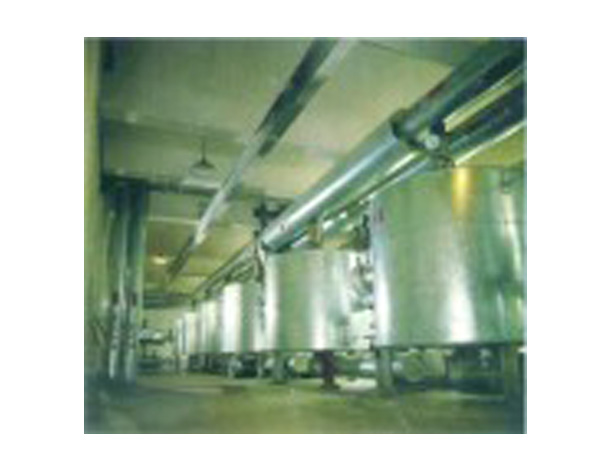
The supplier gives a headline overall heat-transfer coefficient up to 3,000 W/(m²·K) and describes self-cleaning flow. Those are unconditioned supplier statements, not a project selection or proof that cleaning is unnecessary. The original photograph shows several vertical units, but does not identify their materials, nozzle schedules or installed duty. Define fluid properties, temperature approach, pressure loss and inspection access before choosing a spiral construction for the actual heat-recovery task.
Published parameters and their scope
This is an equipment family; its range does not identify one orderable configuration.
- Family designation
- Spiral plate / LLI reference
Swipe the table, or focus it and use arrow keys, to read the conditions and sources.
| Parameter | Published value | Conditions and evidence |
|---|---|---|
| Documented flow form | Two long uniform channels; counterflow exchange described | Original supplier description; actual passes and construction need order drawing. Source |
| Headline transfer coefficient | Up to 3,000 W/(m²·K) | Unconditioned supplier claim, not a constant to use for arbitrary fluids or fouling. Source |
| LLI heating reference | Page caption: LLI spiral steam–water heating performance table | Actual model rows not visible in the reviewed DOM or an identifiable table image; no rated duty inferred. Source |
| Channel separation | Two channels described as welded/sealed | Construction claim does not demonstrate absolute immunity to leakage or crossover. Source |
| Cleaning claim | Single-channel higher-flow/self-cleaning language | No allowable solids, viscosity, velocity or fouling-test schedule provided. Source |
| Missing selection details | No current model, area, material, design limits or pressure-loss selection reviewed | Photographed units are a family reference, not an issued design. Source |
Selection and application review
Select the counterflow duty using real fluid properties
Provide both fluid compositions, flow rates, inlet/outlet temperatures, viscosity ranges and fouling allowance. Request an issued heat-balance and pressure-loss calculation with the chosen channel geometry. Counterflow can support a close approach, but the actual thermal duty and area depend on those conditions.
The source’s 3,000 W/(m²·K) headline and comparison with tubular exchangers lack a matched fluid/test basis. Do not apply that coefficient as a universal constant or convert the photographed units into an invented kW rating. Obtain the minimum approach and turndown performance required for the project.
Match the channel to solids, viscosity and cleanability
The manufacturer describes self-cleaning through a single channel at relatively high velocity. Supply particle size, concentration, deposition tendency and viscosity, then request the actual channel clearance and permitted flow range. No numeric solids or minimum cleaning velocity was reviewed.
Agree chemical/mechanical cleaning methods and inspection access for the exact construction. A welded separation statement does not settle which covers can open or which channel can be inspected. Plan how blockages or a suspected leak can be investigated without relying on a general self-cleaning claim.
Treat steam–water duty as a separate interface problem
The LLI steam–water heating table is named but its values are not available in the reviewed page. If steam heating is required, request the actual LLI datasheet, steam pressure/quality, condensate arrangement and water temperatures. Do not infer a pressure-vessel rating from the table caption or factory’s historical certificate.
Close condensate removal, steam isolation/control and the response to low water flow or loss of the heat sink. Agree the applicable pressure-equipment documentation with the chosen construction. A generic two-channel description does not approve arbitrary steam conditions or supply the necessary control package.
Approve materials, isolation and the installed envelope
Request the plate/channel materials, weld quality records, design temperatures/pressures and nozzle schedule for both sides. Define corrosion and contamination consequences from the actual fluids. The supplier’s claim that fluids do not mix is a construction intent; require appropriate leak/pressure acceptance and monitoring where the process needs it.
The original photo shows vertical assemblies but provides no complete lifting, support or maintenance drawing. Obtain orientation, connection loads, removal/access space and insulation requirements. The source’s reduced-heat-loss/no-insulation wording cannot override the project’s personnel protection and exposure requirements.
Require a traceable selected spiral assembly
Issue the heat-recovery objective, fluid properties, design limits and required service strategy. Obtain the actual model and thermal/hydraulic calculation, channel drawing, materials and maintenance instructions. Hold the unread LLI schedule as a missing source rather than inventing its rows.
Acceptance should include defined leak/pressure tests, heat duty and pressure losses under agreed conditions, with clear cleaning/inspection provisions. Current cost, delivery and independently verified fouling or installed efficiency were not established. The brief is a technically bounded sourcing assessment of a real published family.
Define both fluids
Supply properties, temperatures, flow and fouling/solids limits.
Approve channel service
Close clearance, pressure drop, inspection and cleaning.
Obtain the selected evidence
Require model-specific drawings, ratings and acceptance tests.
Sources and review scope
Compiled by HVACDeck Editorial. Source review identifies what the publication states; it is not an independent performance test or certification.
- Official spiral-plate family pageChecked 2026-10-11 · Complete description and LLI table heading read. Actual LLI schedule absent in rendered text/images; no values invented.
- Original spiral-family photographChecked 2026-10-11 · Original photograph visually read; actual model, materials and duty not identified.

Editorial method and corrections · Report a detail with this page URL
Turn the evidence into an enquiry
Send the manufacturer your required duty, installation conditions and the unresolved items identified in this brief.
Continue the selection
Other equipment from this manufacturer
Jinghai removable plate-exchanger packages