
Mechanical cooling
Paired indoor and condenser capacity and total input at the limiting ambient.
 HVAC & REFRIGERATION
Inverter heat-pipe air conditioning for data centres with compressor and two heat-pipe free-cooling modes, and selectable pump, condenser and spray options.
From Shenzhen Envicool Technology Co., Ltd.
Product guide · HVACDeck Editorial · Sources checked 2026-10-11
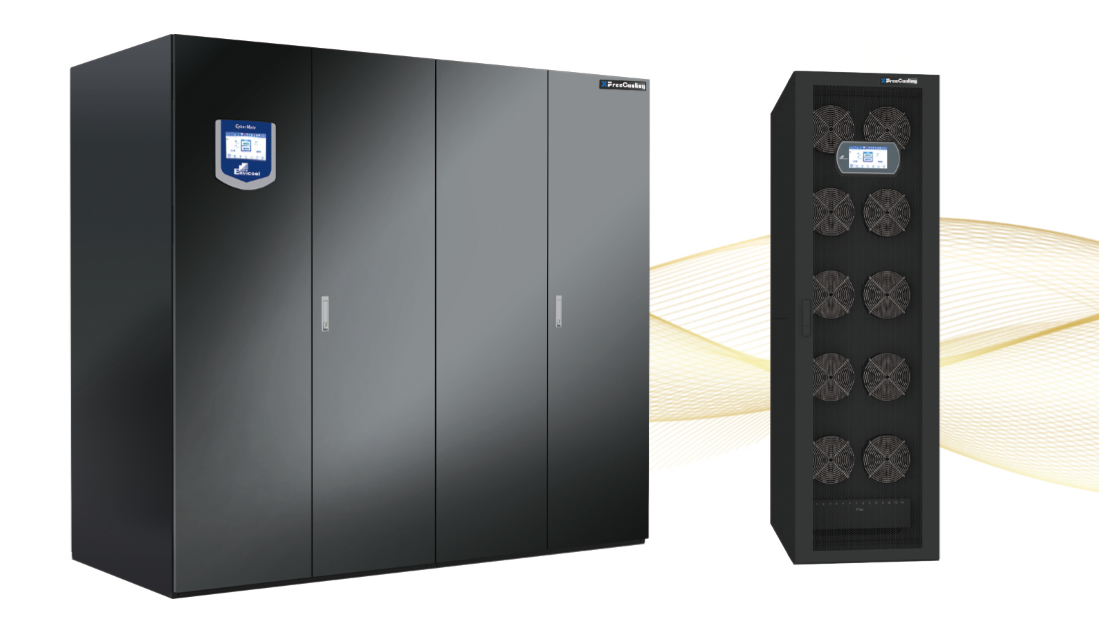
XFreeCooling is Envicool's inverter heat-pipe air conditioning for data centres. It switches between three modes: compressor cooling, turbopowering heat-pipe free cooling and refrigerant-pump heat-pipe free cooling. The unit has a DC variable-frequency compressor, EC speed-controlled fans and a V-shaped evaporator, and it pairs with several condenser and pump arrangements. Turbopowering technology and an evaporative spray component are options you choose.
Envicool's illustration shows a cabinet-style indoor unit and an in-row-style terminal; your quotation lists which of them you receive. Envicool states more than 60% free-cooling time, up to 70% annual saving and pPUE figures for northern and southern regions. Those depend on climate and load, so ask for a calculation on your own weather file. CyberMate V is a separate product line with a different architecture. Send the room load and air conditions, the layout and the planned condenser position for a selection.
This is an equipment family; ask the manufacturer to select the model that matches your duty.
Swipe the table, or focus it and use arrow keys, to read the conditions and sources.
| Parameter | Published value | Conditions and sources |
|---|---|---|
| Operating modes | Compressor; turbopowering heat pipe; refrigerant-pump heat pipe | Ask for the transition thresholds. Source |
| Core equipment | DC inverter compressor, EC fans and V-shaped evaporator | Request capacity, refrigerant and input for the selected unit. Source |
| Condenser configurations | Pump with conventional or centralized condenser | Vertical, horizontal and integrated layouts are described; ask for the limits of the one you order. Source |
| Options | Turbopowering enhancement and evaporative spray component | Name them in the enquiry if wanted. Source |
| Stated annual figures | >60% free-cooling time; up to 70% saving; regional pPUE figures | Ask for the conditions and comparison behind them. Source |
| Selection items | Climate capacity, pipe limits, transition logic and total energy loads | Free-cooling hours and site PUE follow from these. Source |
State whether your order includes turbopowering, the refrigerant pump and the spray option, and ask for the schedule of the indoor unit, compressor, fans and condenser. The feature list on the product page describes the range; the schedule describes your order.
Request the switch points between compressor cooling and each free-cooling mode at your load and climate. Free cooling still uses pump and fan energy, and the compressor runs whenever outdoor conditions fall short of the switch point.
Send the air-side load and conditions, the layout and where the condenser will stand. Get the indoor rating paired with the actual condenser and pump arrangement at the ambient points that matter. Conventional and centralized condensers differ in footprint, connections and total input, so compare them on selected documents.
Ask for pipe length and height limits, the refrigerant charge, service isolation and any network controls. Clarify which terminal, pump, condenser and accessories are supplied.
With spray selected, ask for water quality, consumption, drainage and treatment, and maintenance at the weather points where spray runs. Without spray, use only the dry ratings.
Request instructions for cold weather, idle periods and mode changes, with capacity at the site's environmental limits. The regional efficiency figures cover broad northern and southern climates; ask for a performance map for your location.
For an annual figure, ask Envicool for the weather file, IT load profile, air conditions, comparison equipment and the power counted. List compressor, fan, pump, condenser and spray loads in total input. A pPUE covers the cooling subsystem; whole-facility PUE is a wider figure.
Agree capacity and input measurements at mechanical and free-cooling points, and test the mode transitions, control interfaces and fault response. Define redundancy from the actual equipment and power layout. Obtain drawings, commissioning instructions, spares, warranty and sound at the ordered duty.
Paired indoor and condenser capacity and total input at the limiting ambient.
Pump and turbopowering options ordered, with the mode-transition thresholds.
Your weather, load and energy boundary in place of the regional pPUE figures.
Ask Envicool to confirm in writing: the indoor terminal type and condenser arrangement; whether turbopowering, the refrigerant pump and spray are included; capacity in each mode at your weather points; transition thresholds; pipe limits and refrigerant charge; spray water needs; the annual hours and pPUE calculation for your site; and the price and production slot.
Compiled by HVACDeck Editorial. Figures are as published by the manufacturer; ask for test records for the unit you select.
Editorial method and corrections · Report a detail with this page URL
Send the manufacturer your required duty, installation conditions and the points listed above to confirm.
Envicool MC power-container cooling · Heating, humidity and dry contacts
Envicool BattCool-AC container cooling · Air paths and standby control
Envicool BattCool-C / EMW chillers · Battery coolant and fault duty
Envicool EMA cabinet air conditioners · Air path and filter service
Envicool HC combo cabinet cooling · Heat-pipe and compressor modes
Envicool DC / EC outdoor cabinet cooling · Power and selected duty