
Envicool XRow · In-row DX cooling and humidity control
Select the rack air path, DX circuit and dehumidification duty; separate optional monitoring and heat-pipe equipment from the base order.
From Shenzhen Envicool Technology Co., Ltd.
Individual product research · HVACDeck Editorial · Sources checked 2026-10-11

Specify close-coupled air cooling around the actual rack layout
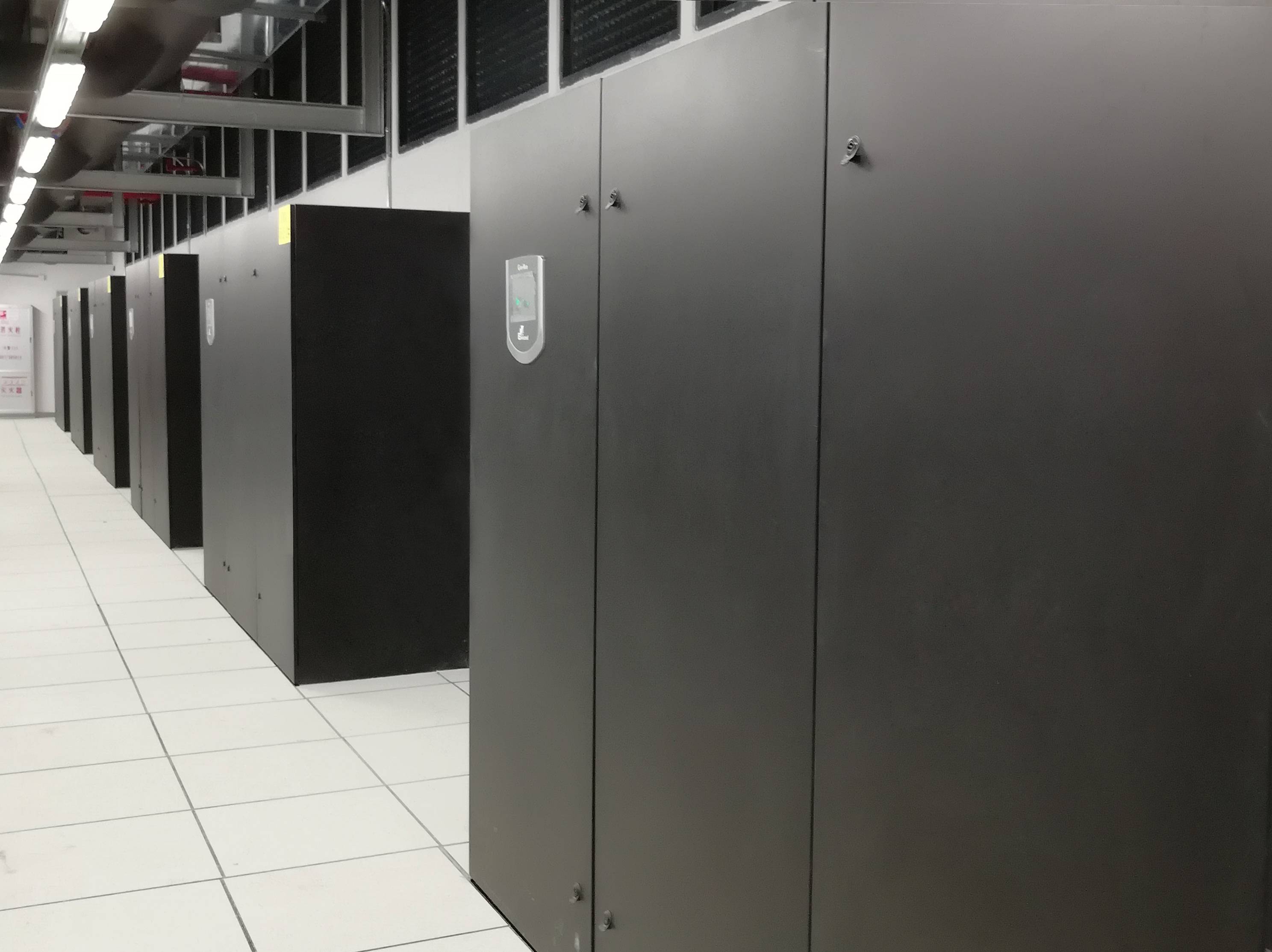
Envicool describes XRow as close-coupled in-row cooling for data centres. The reviewed page gives specific DX architecture: full frequency conversion, a V-shaped coil, EC fans and a dual electronic expansion valve arrangement intended to avoid electric-heater compensation during dehumidification. It also describes fan redundancy, fault/standby switching and an EVO controller. The original photograph shows a row installation; it does not establish the model, rated capacity or performance of a proposed purchase.
Optional heat-pipe technology, extra supply/return temperature and humidity sensors, and remote monitoring are explicitly options. The page's 6–300 kW figure belongs to a wider solution reference, so this brief does not assign it as the XRow rating. Likewise, advertised partial-load and fan savings and pPUE are supplier comparisons without an inspected project calculation. A useful XRow enquiry needs the rack-air path, actual DX equipment pairing, humidity duty and selected redundancy schedule.
Published parameters and their scope
This is an equipment family; its range does not identify one orderable configuration.
- Family designation
- XRow in-row family
Swipe the table, or focus it and use arrow keys, to read the conditions and sources.
| Parameter | Published value | Conditions and evidence |
|---|---|---|
| Reviewed DX architecture | Full inverter design, V-coil and EC fans | Family features; issued model and selected duty not reviewed. Source |
| Humidity-control feature | Dual EEV arrangement; heater compensation described as unnecessary during dehumidification | Supplier operating description; actual humidity envelope and sequences required. Source |
| Controller | EVO with 7-inch colour touchscreen | Displayed capacity/airflow/EER are not independently calibrated measurements. Source |
| Resilience statements | Fan redundancy and automatic standby switching | Requires the selected fan/unit/power schedule and failure-state capacity. Source |
| Explicit options | Heat-pipe enhancement, extra T/H sensors and remote monitoring | Do not assume every option is included. Source |
| Capacity boundary | 6–300 kW appears in a wider solution reference | Not a selected XRow capacity range or a model table. Source |
| Energy comparisons | Partial-load saving >30%; fan comparisons >20% and 20–30% | Different supplier comparisons; do not add them or guarantee site pPUE. Source |
Selection and application review
Locate the in-row units against rack exhaust and containment
Issue rack loads and their distribution, aisle arrangement, expected rack airflow and permitted supply conditions. The selected unit must be assessed where it will sit, including the path between hot exhaust and the coil and the distribution of cooled air. Close-coupled placement is a layout strategy, not proof that any rack can receive its required airflow.
Ask for selected dimensions, service access, airflow direction, available air-side duty and any containment requirements. The source photograph shows installed rows without a named rating or verifiable project measurements. Neither the photograph nor a general solution reference supplies the capacity for your rack layout.
Pair the DX equipment and any heat-pipe option
Obtain the actual indoor model, refrigerant, condenser and compressor/pump arrangement at the required load and outdoor conditions. Ask how full inverter operation is controlled across the intended load range. The heat-pipe enhancement is optional; a quotation without it cannot inherit its transition-season performance.
Request pipe-length/elevation and charge limits, connection drawings, electrical supplies and isolation requirements. The reviewed page does not publish a selected refrigeration schedule. Cooling capacity and complete input must be tied to the equipment pairing, rather than inferred from the broader 6–300 kW portfolio reference.
Review dehumidification without assuming a universal heater-free result
The dual-EEV feature is described as avoiding electric-heater compensation during dehumidification. Supply the required sensible and latent duties, room humidity limits and relevant operating conditions. Ask for the selected air/refrigerant sequence and evidence of stable supply conditions in the humidity modes needed by the project.
Confirm which sensors are included and which extra high-precision supply/return sensors are options. No humidity accuracy, moisture-removal rate or guaranteed operating envelope is published in the reviewed source. Do not turn the feature into an unsupported claim that every environmental condition needs no reheat or additional humidity equipment.
Define what survives a fan or unit fault
Request the selected redundant fan arrangement and remaining thermal/airflow capability after a fan fault. For automatic standby switching, identify the actual standby units, power sources, control links and transition sequence. Fan redundancy and unit redundancy are separate procurement decisions.
Agree refrigerant-insufficiency alarms and the actions they trigger. The supplier describes refrigerant detection and continuous cooling, but no inspected failure test accompanies these statements. Document how alarms, group rotation and supervisory communications will be commissioned, including behaviour if a sensor or communication link is lost.
Use controller readings within the acceptance boundary
The EVO screen displays capacity, airflow and EER. Ask whether each value is measured, calculated or inferred and what sensors and calibration support it. A displayed EER is not automatically a witnessed thermal/energy test. Define the instruments and measurement points used to accept the selected duty.
Compare complete input at matched load, ambient and air conditions. Do not combine the page's separate fan and partial-load savings into a new saving percentage. Remote cloud access requires the ordered module and an agreed access/security arrangement. Current price, lead time and independent annual efficiency remain unknown.
Issue rack and humidity duty
Provide actual aisle geometry, airflow, thermal loads and environmental limits.
Close DX and resilience scope
Select paired equipment, optional heat-pipe hardware, sensors and standby arrangements.
Witness the relevant modes
Agree thermal/input, humidity-control, alarm and failover checks with independent acceptance measurements.
Sources and review scope
Compiled by HVACDeck Editorial. Source review identifies what the publication states; it is not an independent performance test or certification.
- Official XRow in-row air-conditioner pageChecked 2026-10-11 · Complete features and original installation photograph reviewed; DX-specific features separated from options and broader portfolio references.
Editorial method and corrections · Report a detail with this page URL
Turn the evidence into an enquiry
Send the manufacturer your required duty, installation conditions and the unresolved items identified in this brief.
Other equipment from this manufacturer
Envicool MC power-container cooling · Heating, humidity and dry contacts
Envicool BattCool-AC container cooling · Air paths and standby control
Envicool BattCool-C / EMW chillers · Battery coolant and fault duty
Envicool EMA cabinet air conditioners · Air path and filter service
Envicool HC combo cabinet cooling · Heat-pipe and compressor modes
Envicool DC / EC outdoor cabinet cooling · Power and selected duty