
Cling DFDD independent-drive vehicle cooling
A parked-operation auxiliary package needs its engine, exhaust, cooling and chosen roof assembly approved as one system.
From Zhengzhou Cling · Vehicle HVAC and thermal management
Individual product research · HVACDeck Editorial · Sources checked 2026-10-11

Approve independent cooling for a stationary vehicle mission
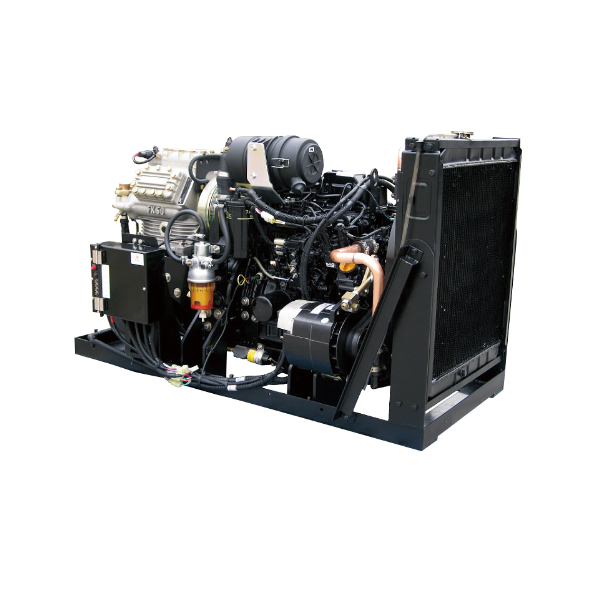
Cling’s DFDD independent-drive air-conditioning offer is described for vehicles needing cooling while parked, such as airport shuttles and medical-examination vehicles. Its original image shows an engine/compressor-style auxiliary assembly rather than a complete passenger roof unit. The source mentions voltage, oil-pressure and water-temperature alarms and names compatible roof-system schemes, but supplies no engine model, fuel consumption, exhaust installation or full package dimensions.
DFDD-06 lists 37 kW cooling, 8,000 m³/h evaporator airflow and 650 cc compressor displacement. The dimensions area gives roof-scheme names instead of a complete numerical envelope. Select the auxiliary engine, actual rooftop combination and stationary operating interfaces together. A published independent-operation feature does not prove mission availability, low installed noise, an emissions approval or the energy cost of an arbitrary parked-vehicle duty.
Published parameters and their scope
This is an equipment family; its range does not identify one orderable configuration.
- Family designation
- DFDD
Swipe the table, or focus it and use arrow keys, to read the conditions and sources.
| Parameter | Published value | Conditions and evidence |
|---|---|---|
| Actual application | Independent cooling while parked; airport shuttle and examination-vehicle examples | Official description, not a verified project or guaranteed mission result. Source |
| DFDD-06 reference | 37 kW cooling; evaporator 8,000 m³/h; condenser 10,000 m³/h; compressor 650 cc | Shared footnote indoor 40°C/outdoor 35°C; speed/humidity and full input undefined. Source |
| Other source sizes | DFDD-05 33 kW; DFDD-07 44 kW | Family alternatives within one parked-duty review; not separate capacity URLs. Source |
| Roof-scheme table | DD/SDD/BFFD scheme names in the size section | No complete numerical auxiliary/skid/installed envelope provided. Source |
| Published alarm functions | Voltage, oil pressure and water temperature | Trip limits, sequence, sensors and restart logic not reviewed. Source |
| Missing engine and service file | No engine model, fuel/emissions/noise schedule, refrigerant entry or current installation drawing | Do not borrow R134a or another roof assembly’s dimensions as a complete DFDD specification. Source |
Selection and application review
Define the parked mission and independent availability
Provide the required stationary duration, ambient, cabin load, occupancy/doors and site operating restrictions. Ask for the chosen auxiliary/roof combination’s duty at the actual conditions and the starting, stopping and sustained-operation sequence. The page’s application examples do not establish a delivered project or hours of guaranteed service.
Agree what remains powered when the main vehicle is off, the fuel/electrical supply and failure response. If the mission requires continuity, select redundancy/backup against a defined failure scenario rather than treating an independent engine as automatically redundant with the vehicle’s normal system.
Approve engine exhaust, cooling and installation access
Request the exact engine, fuel, consumption/emissions and heat-rejection requirements. Obtain supplier/vehicle-builder installation instructions for ventilation, exhaust routing, supports, vibration isolation and fire/service access. No numerical exhaust or clearance rules are invented here from the photograph.
Assess stationary operation under the actual deployment’s exhaust/noise constraints using measured and applicable approval evidence. The source’s low-noise/fuel/emissions wording provides no test values. Approve an installation file rather than presenting those adjectives as mission permissions or independent performance.
Match the auxiliary drive to an issued roof-system configuration
The table’s dimension area lists roof schemes instead of a complete machine envelope. Obtain the actual DD, SDD or BFFD combination, compressor drive arrangement and current thermal/air schedule. A listed scheme name does not prove every roof variant is interchangeable at the same speed or refrigerant conditions.
Close refrigerant type/charge, piping, electrical controls and included components. The DFDD table does not explicitly list refrigerant, so do not import another family’s R134a row as if it were published DFDD data. Reserve both roof service and auxiliary-engine removal space.
Test the protective and zone-control sequence
The source mentions voltage, oil-pressure and water-temperature alarms. Obtain thresholds, shutdown permissions, warning/trip behaviour and restart procedure for the actual engine/controller. Confirm supervision and the operator’s response during an unattended or partially staffed stationary mission.
Define zone temperature control and air distribution for the selected vehicle interior. The DFDD airflow row has no actual duct-resistance or zone allocation. Request the installed cooling and acoustic evidence needed for the mission, particularly where stationary noise and cabin separation matter.
Accept the complete independent-drive package
Issue the parked-duty profile, vehicle/roof/auxiliary compartment drawings, climate and site restrictions. Obtain the selected engine/roof configuration, conditioned performance, fuel/electrical demand and installation/protection documents. Keep the supplier’s web-configuration warning tied to a current signed selection.
Acceptance should cover starting/sustained stationary cooling, exhaust/heat rejection, controls/alarms, leak tests and service access. Current price, stock, firm delivery, independent emissions/noise and verified mission uptime remain unknown. This individually researched family brief addresses the parked-operation problem without inventing a turnkey approval.
Specify stationary duty
Define load, duration, climate and deployment restrictions.
Approve the complete package
Close engine, roof scheme, exhaust/cooling and service interfaces.
Verify mission functions
Test sustained cooling, alarms, controls and handover.
Sources and review scope
Compiled by HVACDeck Editorial. Source review identifies what the publication states; it is not an independent performance test or certification.
- Official DFDD independent-drive pageChecked 2026-10-11 · Complete three-model table, parked-use description, alarm/engine claims and update warning read; unprovided refrigerant/dimensions not inherited.
- Original DFDD auxiliary assembly imageChecked 2026-10-11 · Original engine/compressor-style assembly visually inspected; actual engine model, approval and full package unverified.

Editorial method and corrections · Report a detail with this page URL
Turn the evidence into an enquiry
Send the manufacturer your required duty, installation conditions and the unresolved items identified in this brief.
Continue the selection
Other equipment from this manufacturer
Cling EFDR independent glycol cooling
Cling EDDR roof-mounted liquid battery cooling
Cling FFND/XFND internal bus cooling
Cling GZHD/EZHS rear-mounted bus HVAC