
Cling EZDD/EZDS electric passenger heat pumps
A passenger-HVAC electrical platform with documented voltage ranges; battery duty and complete-unit protection cannot be inferred.
From Zhengzhou Cling · Vehicle HVAC and thermal management
Individual product research · HVACDeck Editorial · Sources checked 2026-10-11

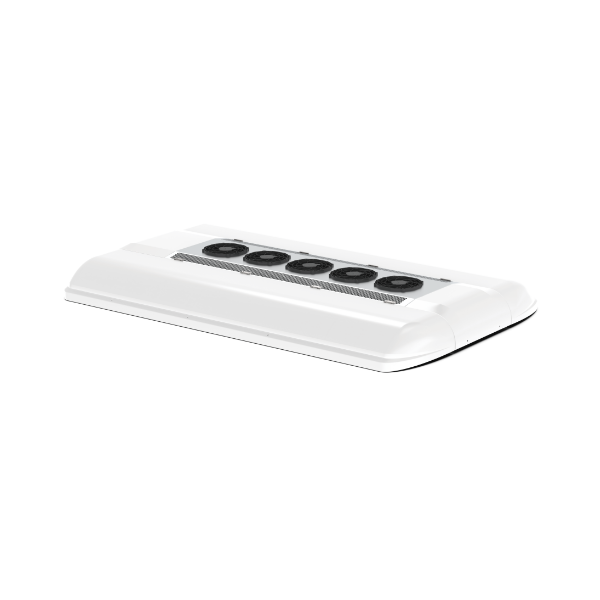
Approve EZDD/EZDS vehicle power, passenger duty and roof fit
Cling’s ordinary EZDD/EZDS electric heat-pump family is specified for passenger climate control on 6–13 m electric, hybrid and fuel-cell buses. The page describes full-DC inverter operation, PWM speed control and electronic expansion valves, and provides a 400–750 V high-voltage platform plus 24 V low-voltage platform. Its table does not list a battery liquid-cooling duty; that function belongs to a separately identified integrated offer, not an assumed feature of this passenger-only schedule.
EZDS-04 lists 28 kW cooling, 26 kW heating, R407C and a 245 kg roof assembly. The source footnote gives indoor 40°C/outdoor 35°C but omits humidity, separate heating conditions and electrical input. It claims IP67 for key components rather than a reviewed complete-unit enclosure rating. Use the published platform and airflow rows to define the vehicle interface, then obtain the exact selected performance, power and approval documents.
Published parameters and their scope
This is an equipment family; its range does not identify one orderable configuration.
- Family designation
- EZDD / EZDS
Swipe the table, or focus it and use arrow keys, to read the conditions and sources.
| Parameter | Published value | Conditions and evidence |
|---|---|---|
| Electrical platforms | High voltage 400–750 V; low voltage 24 V | Published five-model table; current, startup and protection/interface limits not supplied. Source |
| EZDS-04 thermal reference | 28 kW cooling; 26 kW heating | Shared footnote indoor 40°C/outdoor 35°C; heating and humidity conditions need confirmation. Source |
| Actual refrigerant | R407C | Not interchangeable with LEZDS-J R410A or CEZDD R744; charge/service data missing. Source |
| EZDS-04 air/roof reference | Evaporator 4,000 m³/h; condenser 8,000 m³/h; 2,750 × 2,000 × 260 mm; 245 kg | Published body and airflow values; vehicle distribution/supports need approval. Source |
| Protection scope | Key components described as IP67 | No exact component list/test file or complete-unit IP rating reviewed. Source |
| Battery boundary | No battery coolant-capacity row in this ordinary family table | Do not inherit the integrated J-series battery or simultaneous-load schedule. Source |
Selection and application review
Validate the complete electrical operating window
Provide the vehicle’s actual high-voltage range, 24 V auxiliary supply, transients, charging modes and control permissions. Obtain current/input limits, wiring/protection, interlocks and startup/shutdown requirements for the selected model. A nominal 400–750 V platform does not establish compatibility with every condition a vehicle power system can produce.
Define low-voltage-loss and communication-loss responses, recovery after power interruption and the control boundary with the vehicle controller. The published PWM and electronic-expansion-valve wording describes mechanisms, not a complete integration protocol or electrical approval file.
Select cabin performance under a defined load cycle
Use passenger heat load, occupancy, doors, solar exposure and climate rather than bus length alone. Request cooling/heating maps at the project’s air conditions and electrical operating points, including input and part-load control. The table’s nominal kW values cannot establish whole-vehicle energy use or range impact.
The shared 40°C indoor/35°C outdoor footnote does not provide a separate cold-weather heating/defrost schedule. Obtain that evidence if the vehicle needs winter operation. Do not adopt another Cling family’s low-temperature range or backup behaviour for the ordinary EZDD/EZDS assembly.
Keep battery and protection claims within their scope
The table is passenger-HVAC information, without a battery liquid-circuit capacity row. If the project needs combined battery duty, request the appropriate integrated configuration and its coolant/simultaneous-load schedule. A similar roof casing does not add that circuit to this family.
The page says key components meet IP67. Ask which components, what test/report applies and how installed connectors, covers and service joints are protected. Do not label the entire roof assembly IP67 or infer suitability for arbitrary water exposure from a component-level claim.
Coordinate air distribution, roof loading and maintenance
The EZDS-04 airflow, mass and outline differ from larger/smaller family rows. Obtain the selected return/discharge openings, air-distribution resistance, roof mounting and structural loads with an actual vehicle drawing. The suggested 7.5–9 m fit range does not prove passenger pull-down or a body builder’s support approval.
Close condensate drainage, vibration isolation, refrigerant service and the route for component replacement. The page promotes a V-shaped vibration/noise design but supplies no comparable sound value here. Request the acoustic and vibration data required by the exact installation.
Freeze the passenger-only configuration and vehicle tests
An enquiry should include passenger loads/climate, vehicle electrical/control architecture and roof/duct drawings. Obtain the selected model, conditioned duty/input schedule, interface documentation and applicable destination approval. Keep the supplier’s configuration/update warning linked to the approved revision.
Acceptance should verify power/control functions, air delivery, cabin pull-down/heating and relevant environmental/vibration requirements. No price, stock, current delivery or independently measured vehicle efficiency was established. This individually written brief distinguishes a documented passenger system from unprovided battery and whole-unit claims.
Approve vehicle power
Close high/low voltage, input, interlocks and control permissions.
Select the cabin duty
Obtain climate/part-load performance and heating/defrost evidence.
Test the installed scope
Verify air, roof, control and model-specific approval requirements.
Sources and review scope
Compiled by HVACDeck Editorial. Source review identifies what the publication states; it is not an independent performance test or certification.
- Official ordinary EZDD/EZDS pageChecked 2026-10-11 · Complete table, electrical platform, component-IP wording and update disclaimer read. No battery circuit or independent test inferred.
- Original ordinary electric-family imageChecked 2026-10-11 · Original roof-unit image visually inspected; motor/electrical/control package must be confirmed.

Editorial method and corrections · Report a detail with this page URL
Turn the evidence into an enquiry
Send the manufacturer your required duty, installation conditions and the unresolved items identified in this brief.
Continue the selection
Other equipment from this manufacturer
Cling EFDR independent glycol cooling
Cling EDDR roof-mounted liquid battery cooling
Cling DFDD independent-drive vehicle cooling
Cling FFND/XFND internal bus cooling